Was Obama a good president?

The Poster said “Hope”
When Obama took office in 2009, Democrats controlled the White House and both chambers of Congress. In 2010, they suffered a historic midterm defeat. ... a “shellacking.”

Republicans gained 63 seats in the House and took control of the chamber. The slow economic recovery and dissatisfaction with Obama’s agenda contributed to the backlash.

The losses continued beyond 2010. By the end of Obama’s presidency, Democrats had lost more than a thousand seats across Congress, state legislatures, and governorships. Obama’s record as a party-builder is questionable.

Shepard Fairey’s Obama “Hope” poster

Bibliography

Obama Humbled by Election “Shellacking” »

As Obama Accomplished Policy Goals, Democrats Floundered

The Democratic Party Got Crushed During the Obama Presidency. Here’s Why »

I had the poster and I hoped ...

I believe Obama too often chose compromise when supporters wanted a more forceful fight.
Nearly two decades after that poster was printed, “Hope” feels like an abandoned promise.

I voted for him a second time, but the Poster was long gone.
Looking back, I wonder how much the weaknesses of those years helped shape the political climate that we are in now.


The Obama administration's response to the financial system crisis brought limited relief to many homeowners and little to no accountability for financial executives.

The bank rescues began before Obama took office. His administration continued efforts to stabilize the financial system and launched the Home Affordable Modification Program.

HAMP aimed to help millions avoid foreclosure, but it reached far fewer homeowners than intended, as it relied on mortgage servicers to process applications with almost zero oversight.
Federal white-collar prosecutions were incredibly low by 2015.

Occupy Wall Street protest

Bibliography

Our Guide to Obama’s Floundering Foreclosure Programs

Secret Documents Show Weak Oversight of Key Foreclosure Program

Government’s Loan Modification Program Crippled by Lax Oversight and Deference to Banks

Federal White Collar Crime Prosecutions at a 20-Year Low

The question is not whether the crisis was difficult to untangle, or whether the administration took steps to stabilize the economy.

Was stabilizing the financial system more important than delivering relief to homeowners?  Should the financial execs have been held accountable?

The promise of “change” without consequences for Wall Street became a lasting source of disappointment.


Ombama failed to pursue a strategy that might succeed in closing the prison at Guantanamo.

On his second full day in office, Obama signed an executive order calling for the detention facility to close within a year.
In 2016, he said: “For many years, it’s been clear that the detention facility at Guantanamo Bay does not advance our national security—it undermines it.”

A central part of Obama’s plan was blocked when Congress imposed restrictions on the transfer of detainees to U.S. facilities.

Obama didn't try to bring the dispute to court or overcome the congressional blockade.

Campaigners at a Close Guantánamo vigil

Bibliography

This Is About Closing a Chapter in History »

Remarks by the President on Plan to Close the Prison at Guantanamo Bay

Statement of Administration Policy: H.R. 2685, Department of Defense Appropriations Act, 2016

Obama’s Plan to Close Guantánamo Bay Prison Meets Opposition in Congress

Guantánamo became an early test of the distance between Obama’s language and what he ultimately achieved.

Congress constrained his options, and the legal limits of unilateral action were disputed.

That helps explain why it remained open, but it doesn't erase the disappointment of a promise left unfulfilled.


Obama expanded the targeted-killing program, authorizing his first drone strikes on January 23, 2009.

Much of the program’s legal rationale, targeting process, and strike-level evidence remained secret.

In 2016, his administration published estimates of civilian deaths from U.S. strikes outside areas of active hostilities. The figures were far below independent estimates.

His executive order for reports on casualties and reduction of civilian harm offered limited improvement, and did not provide the detail needed to verify the administration’s claims or scrutinize particular strikes.

A visual accompanying an opinion article about drone strikes

Bibliography

Obama’s Covert Drone War in Numbers: Ten Times More Strikes than Bush »

White House Documents Number of Civilians Killed in U.S. Drone Strikes

Officials: U.S. Report Will Say Drones Have Only Killed 100 Civilians

President Obama’s New, Long-Promised Drone “Transparency” Is Not Nearly Enough

The issue is less a broken promise than a continuity of power.

Obama inherited a machinery of secret, distant force and made it an instrument of policy. He may have seen it as a way to avoid larger wars.

It made lethal power easy to use and hard to scrutinize.

Obama released the Bush torture memos in April 2009, but chose to “look forward, not backward.”

The Justice Department investigated some cases, but the inquiries were limited and ended without criminal charges. The failure to investigate and prosecute senior decision makers left a serious accountability gap.

In one of his first acts as president, Obama prohibited the interrogation techniques described in the Bush-era memos, then went on to say: “This is a time for reflection, not retribution”.

Editorial cartoon about torture during the Bush administration

Bibliography

Obama’s Torture Problem

Blistering Indictment Leveled Against Obama Over His Handling of Bush-Era War Crimes

Obama & Counterterror: The Ignored Record »

No More Excuses: A Roadmap to Justice for CIA Torture

Can a country credibly reject abuses while declining to fully investigate those responsible for them?

Should Obama have pushed for accountability for Bush, Cheney, and other senior officials? Instead, he helped shield them from criminal prosecution.

Obama failed to fight for the Freedom of Choice Act, despite a campaign promise to sign it.

The bill had last been introduced in 2007. On the campaign trail, Obama told a Planned Parenthood audience: “The first thing I’d do as president is sign the Freedom of Choice Act. Now, that’s the first thing I’d do.”

Democrats controlled the House and the Senate, yet the bill was not reintroduced in the 111th Congress. In April 2009, Obama said it was “not my highest legislative priority.” Obviously, he couldn't enact FOCA on his own. And even though he couldn't rely on a 60-vote majority due to some of the democrats uncertainty, he could have pushed members of Congress to introduce it, held hearings, and publicly campaigned for a vote. He chose otherwise.

Obama bears responsibility for setting aside a campaign commitment and not using his office to press for it.

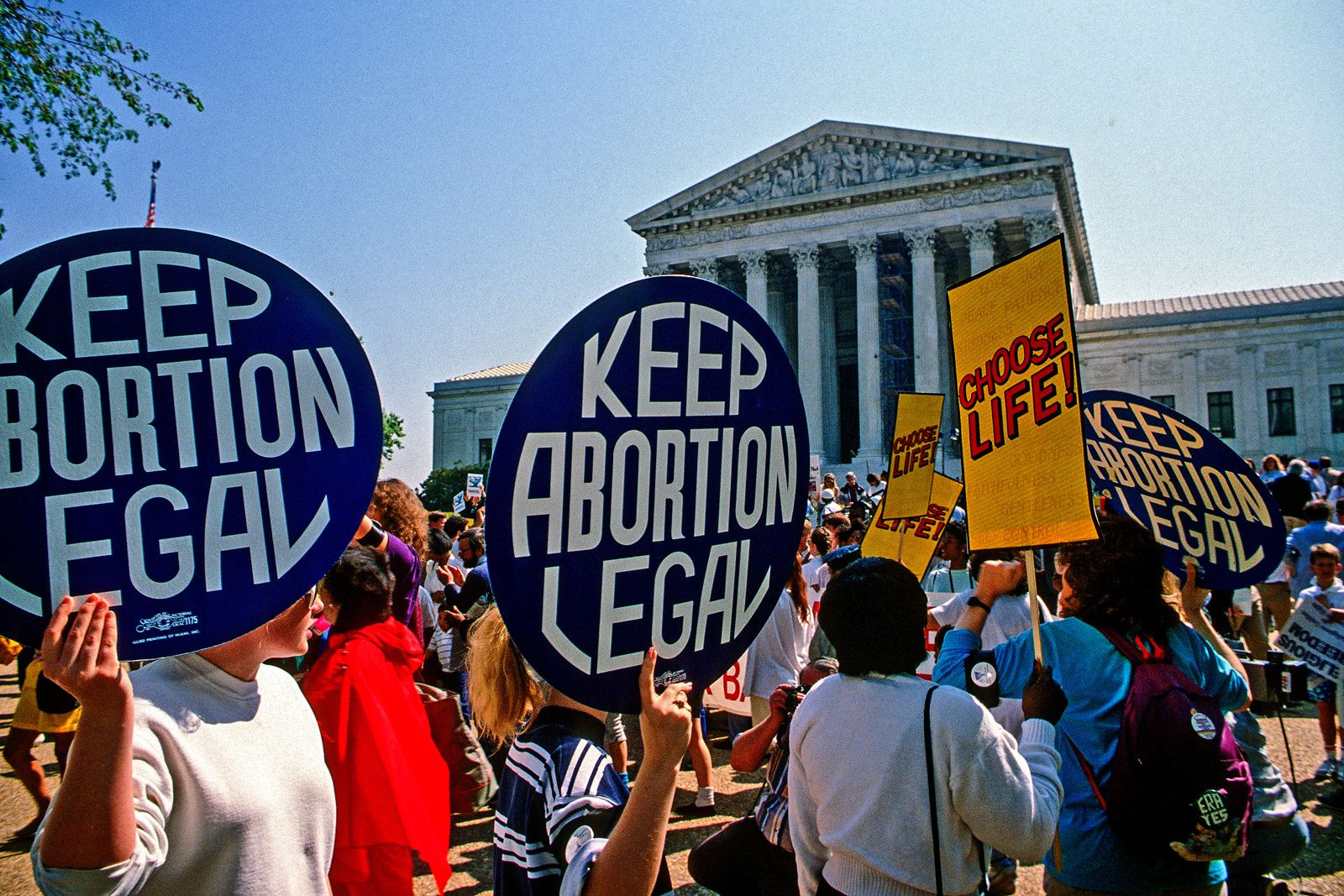
Abortion-rights demonstration in Washington, D.C.

Bibliography

“That’s the First Thing I’d Do” »

Obama on FOCA, 2.0

Freedom of Choice Act Is Far from Passage

Abortion Law on Democrats’ Back Burner

This episode fits a wider frustration with the gap between expectation and priorities.
“HOPE”

Once in office, we watched him retreat amid competing demands and political calculation.

Our disappointment is not only about that bill, but about how quickly the cause seemed to slip away when Obama stopped pressing for it.


Obama did not make the ACA public option a deal breaker.

Obama publicly supported a public option during the health reform debate, but he chose not to make its inclusion a condition of signing the final deal. He bears political responsibility for accepting a law without it.

In September 2009, he described it as a way to increase choice and competition and keep insurance companies honest. As negotiations continued, the public option was dropped from the bill, as Senate leaders argued they might not have the votes to pass it.

Obama could have fought to keep it in the bill, but instead prioritized passing reform without the very plan he had publicly defended. The ACA expanded coverage, but the exchanges did not include a public insurance plan to compete with private insurers.

Illustration comparing a public option and single-payer health care

Bibliography

Obama Shying Away from Public Option—or Not?

Remarks by the President to a Joint Session of Congress on Health Care

Remarks by the President to the Annual Conference of the American Medical Association

Senate Democrats Drop the Public Option to Woo Lieberman, and Liberals Howl

The Affordable Care Act was a legislative achievement, but the public option’s disappearance reveals the kind of compromise that defined Obama’s approach to governance.

Pass consequential reform by accepting a more limited version of the change many of us wanted. Was the public option impossible, or did Obama define what was possible too narrowly, too early?


Obama did not push for new federal gun legislation during his first term, despite Democrats controlling both the House and Senate

In 2009 and 2010. That political opportunity ended after the 2010 midterm elections, when Republicans took control of the House.

After the Sandy Hook shooting, Obama made gun control a major priority and pressed Congress to act. In 2013, a proposed expansion of background checks received 54 votes in the Senate, short of the 60 needed to advance. Obama deserves criticism for not making the issue a priority earlier.

Barack Obama speaking about gun control

Bibliography

President Obama neglected gun policy during his first term »

Senate Blocks Expanded Gun Sale Background Checks

The aftermath of Sandy Hook and the legislative response

When action comes only after a crisis, it doesn't look like leadership.

It looks like a response to pressure that should not have been necessary.

The 2010 Republican wave helped REDMAP reshape state legislative and congressional districts

Obama’s unpopularity and the political climate contributed to Democratic losses in 2010. Those losses helped create the conditions in which a Republican strategy focused on winning state legislative races could succeed.

An Associated Press report carried by PBS says voters’ anger over the weak economy, bank bailouts, deficits, and Obama’s health-care law helped fuel the 2010 Republican wave. It also reports that Democrats did not invest enough in state legislative races. Republicans used REDMAP funding to target some of those races, helping them gain control of state legislatures involved in redrawing congressional districts.

Cover of David Daley’s book Ratf**ked

Bibliography

How Republicans Stole Our Democracy »

GOP gerrymandering creates uphill fight for Dems in the House »

In 2010, Republicans ‘Weaponized’ Gerrymandering. Here’s How They Did It.

How targeted spending affected low-profile state legislative races

David Daley, Ratf**ked: The True Story Behind the Secret Plan to Steal America’s Democracy (2016)

Democrats’ losses in the 2010 state legislative elections mattered beyond that election.

They left Republicans better positioned to shape district maps after the census.

REDMAP helped turn that opportunity into an advantage that continues today.

Obama’s administration recorded more than 3.1 million ICE deportations

That was over eight years, compared with fewer than 932,000 during Trump’s first four years, according to the same TRAC dataset.

The totals alone do not show that the administrations’ approaches were equivalent. But the scale of removals under Obama was substantial, and his administration is responsible for the enforcement actions it carried out. DACA and later changes in enforcement priorities offered relief to some people; they did not erase the deportations.

Barack Obama speaking about immigration

Bibliography

Did Obama deport more people than Trump? »

Fact check: Trump vs. Obama on ICE deaths and deportation

Did President Obama remove more noncitizens from the U.S. than any other president in U.S. history?

What does it mean to claim compassion while deportation remains a central tool of enforcement?

Policy should be judged not only by its stated intentions, but also by the people who bear the costs.

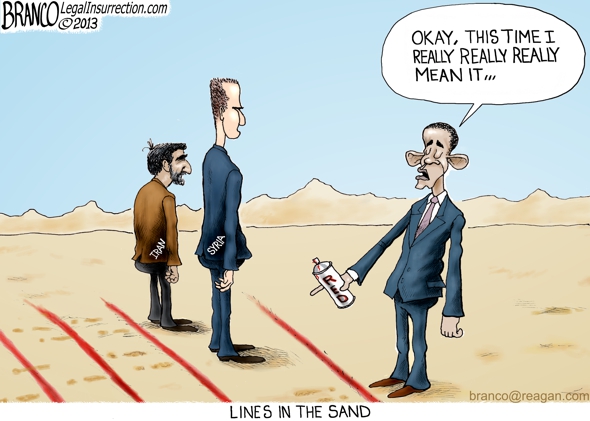
Obama drew a red line in the sand on chemical weapons

After the 2013 Ghouta attack, Obama did not order airstrikes, which many had expected. He instead sought congressional authorization and accepted a Russian-backed agreement to remove Syria’s declared chemical arsenal.

The agreement achieved a substantial disarmament result, but it did not end chemical-weapons use in Syria. Later attacks were documented, and questions remained about whether Syria’s declaration of its chemical arsenal was complete.

Illustration of a line drawn in the sand

Bibliography

Obama’s Blurry Red Line »

“The President Blinked”: Why Obama Changed Course on the “Red Line” in Syria

Syria and the OPCW

A public warning creates expectations, and failing to enforce it can damage credibility.

Yet enforcing it could also have uncertain consequences. Restraint may prevent one catastrophe while increasing the risk of another.

A leader who draws a line must reckon with the consequences of both enforcing it and leaving it unenforced.

Obama supported retaining significant surveillance authorities, including Section 702.

After the Snowden disclosures, Obama signed the USA FREEDOM Act endeding the NSA’s bulk collection of Americans’ phone records under Section 215.

But, he defended NSA surveillance programs as a necessary balance between security and privacy. Section 215 was replaced with a system based on specific terms and court orders.

Under Section 702, the government could continue targeting foreigners abroad, while collecting communications involving Americans.

Although he ,

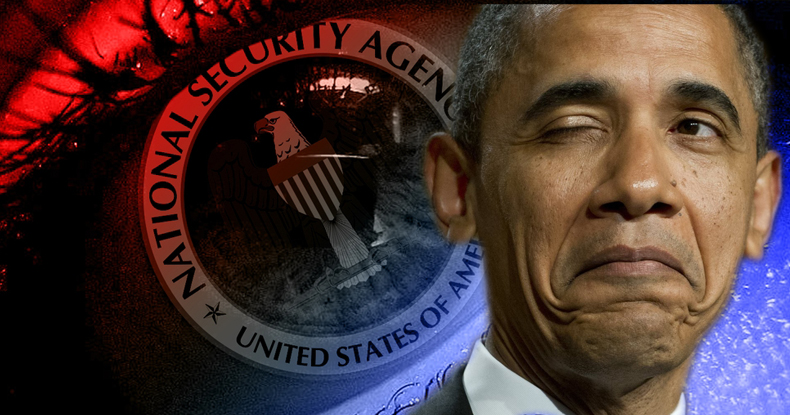
Barack Obama speaking about surveillance

Bibliography

Barack Obama defends US surveillance tactics »

FACT SHEET: Review of U.S. Signals Intelligence

Foreign Intelligence Surveillance: A Resource Page

The surveillance debate brings a familiar tension into public life: security offered as the justification, secrecy as the operating condition.

The question is not only whether the programs were lawful or useful, but whether the public had enough information to understand and contest the bargain being made.

Obama inherited broad authorities and chose to preserve many of them. That continuity became part of his record.

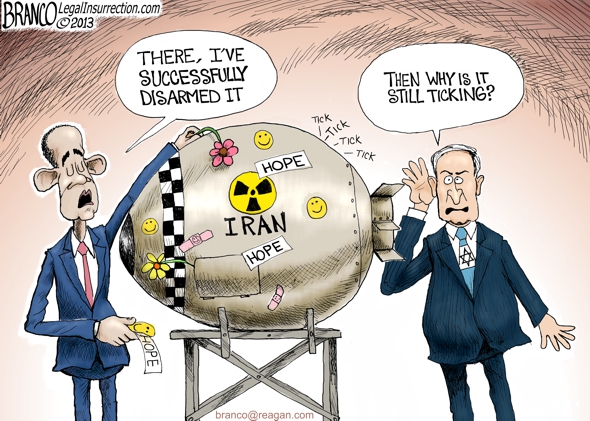
Obama accepted a consequential trade-off in negotiating the JCPOA

The agreement imposed significant, internationally monitored limits on Iran’s nuclear program, but did not directly restrict its ballistic-missile program. Separate, time-limited missile provisions appeared in UN Security Council Resolution 2231.

While the agreement’s monitoring and verification provisions were intended to provide oversight, he JCPOA did not resolve disputes over Iran’s missile program or its regional activities. The UN’s time-limited missile provisions later expired, and UN sanctions were reinstated in September 2025.

Obama chose an agreement focused on limiting Iran’s nuclear program rather than one that also resolved its missile program and regional activities. That choice produced substantial nuclear constraints, but left other concerns unaddressed. Obama bears responsibility for accepting those trade-offs.

Illustration about Iran’s nuclear program

Bibliography

The Revenge of the JCPOA »

What Is the Iran Nuclear Deal?

The Joint Comprehensive Plan of Action (JCPOA) at a Glance

The Iran nuclear agreement shows why a critical account should distinguish between compromise and failure.

Negotiation means accepting limits in exchange for something considered more valuable.

Were the terms and risks worth that exchange? There are serious disagreements about what it conceded—and what it left unresolved.

Obama nominated Garland, but did not force a confirmation fight

Article II, Section 2 of the Constitution gives the president power to make certain appointments during a Senate recess. Obama could have tried to use that power even though the Senate’s pro forma sessions posed an obstacle.

Obama nominated Merrick Garland in March 2016, but Mitch McConnell and Senate Republicans refused to hold a hearing or vote. Obama did not turn the blockade into a public or political confrontation.

A recess appointment would have challenged the Senate’s refusal to act, even though it would have faced serious legal challenges. Garland’s nomination expired with the end of the 114th Congress; Donald Trump later nominated Neil Gorsuch to fill the vacancy.

Merrick Garland

Bibliography

Obama Can and Should ... »

The Garland Affair: What History and the Constitution Really Say About President Obama’s Powers to Appoint a Replacement for Justice Scalia

Obama Can Put Merrick Garland to Work on Supreme Court Immediately (Even Without Senate Approval)

The question is not simply whether Obama could have put Garland on the Court unilaterally. That option was legally uncertain.

It is whether Obama did enough to challenge the Republicans and make the stakes clear.

Garland’s nomination expired, and the vacancy was later filled by Trump.

How much more could Obama have done, and what would it have hurt for him to try?

Obama ultimately backed Clinton, not Biden. A choice that reflected where his support lay.

Biden wanted the presidency and was considering a 2016 campaign. Obama’s support could have strengthened Biden’s prospects; without it, Biden may have faced a steeper path in a party increasingly aligned behind Clinton. Stronger backing from Obama might have led Biden to run.

In my view, Obama and the Democratic Party failed to make a more compelling case to communities that felt insecure or left behind. Economic dislocation and manufacturing decline were among the conditions Trump exploited in the Midwest. Biden, with his Scranton roots and working-class political image, might have been a stronger messenger with some of those voters.

There is evidence that Biden faced discouragement from Obama’s political circle. Obama adviser  David Plouffe later recalled  telling Biden there was “no room” for him in the 2016 race. Obama’s public support for Clinton, combined with the party’s broader alignment around her, may have made it harder for a Biden campaign to gain momentum.

Barack Obama and Hillary Clinton

Bibliography

Barack Obama favored Hillary Clinton over Joe Biden »

Biden Book Looks Back at the Path He Didn't Take

It Won’t Be Easy to Bring Back Millions of Manufacturing Jobs

What If Joe Biden Had Run?

JOE BIDEN claimed former US President Barack Obama discouraged him from running in the 2016 election

Obama’s endorsement was not a command voters had to follow, and it could not guarantee an outcome.
Still, his support for Clinton carried symbolic weight.

Did it reflect caution, personal judgment, or a broader failure to grasp the political moment?
That question is unresolved.

We know Biden wanted to be president. Would he have won in 2016 ?

During Obama's presidency, Democrats lost ground in Congress, state legislatures, and governorships.

Obama focused more on policymaking and his campaign organization than on building the party’s state and local infrastructure.
The party entered the next political era with weakened local infrastructure and a tenuous connection to many rural and exurban voters.

Obama later acknowledged that Democrats had ceded too much ground in local races and had failed to make those voters feel the party was fighting for them.

Obama's record as a party-builder remains a significant part of the debate over his legacy.

Political meme

Bibliography

The Fragile Legacy of Barack Obama »

As Obama Accomplished Policy Goals, Democrats Floundered

The Democratic Party Got Crushed During the Obama Presidency. Here’s Why »

Obama won landmark policy victories, but Democrats also lost ground during his presidency.

Were his achievements built on a political foundation strong enough to preserve them?

The argument is not that Obama achieved nothing, but that policy accomplishments may prove more fragile without lasting political support.